
Home › Blog › A parent's house after they pass
Inherited homes
What to do with your parent's house after they pass (a Tulsa family's guide)
Losing a parent is hard enough. Then, somewhere between the funeral and the casserole dishes, someone asks, "So what are we doing with the house?" This guide covers the practical side: what to do in the first 30 days, what the house costs while you decide, how to clean it out, and how to choose between keeping, renting and selling it.
The short version
- Protect the house first. Locks, insurance, utilities and mail. Decide later.
- Find out who can make decisions before anyone signs anything. That part is for an attorney.
- Add up what the house costs each month. Our expense calculator below adds it up for you, and that number makes a lot of decisions for you.
- You have three real choices: keep it, rent it, or sell it (listed or as-is).
- Clean out the papers and keepsakes first. The furniture can wait. And if you sell to us, you don't have to clean out anything at all.
You don't have to decide this month
There's a strange pressure to have a plan for the house right away, usually from the relative who's already measuring the living room for their recliner. You don't need one. What you need in the first few weeks is a house that's safe, insured and not quietly growing something in the fridge.
Grief makes big decisions harder, and the house will still be there in a month. Give yourself room to think, then decide with real numbers in front of you.
The first 30 days: protect the house
None of this commits you to keeping or selling. It just keeps a hard situation from getting more expensive.
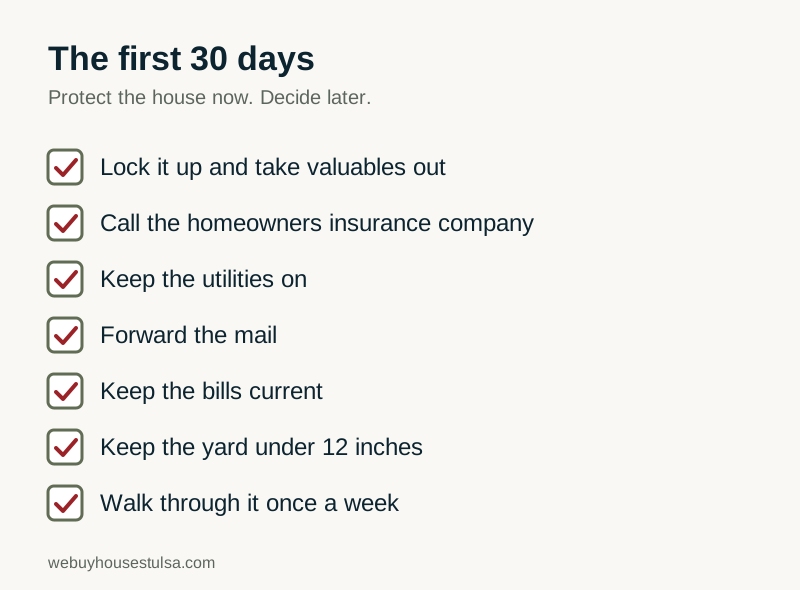
Lock it up
Find every key you can, then assume you didn't find them all. Changing or rekeying the locks is cheap peace of mind, since you rarely know how many neighbors, caregivers and old friends ended up with a spare. Take jewelry, cash, guns, prescriptions and important papers somewhere safe.
Call the insurance company
Tell your parent's homeowners insurance company that the owner passed away and whether the house is empty. Many policies limit coverage once a home has been vacant for a while, so ask exactly what applies and whether you need a vacant-home policy. This is the call people forget, and it matters most if something goes wrong.
Keep the utilities on
Shutting everything off feels like saving money, but a Tulsa ice storm and an unheated house is a burst pipe waiting to happen. Keep the heat on in winter, run the AC enough in summer to keep humidity down, and leave the water on so you can tell if something leaks. In Tulsa, keep the City utility account active too. You'll need its Customer ID and Account number later to schedule a bulky waste pickup.
Handle the mail and the bills
Forward the mail to whoever is handling things. It's the fastest way to find out about accounts, bills and policies nobody knew about. Then call the mortgage company, if there is one, let them know, ask what they need from the family, and keep payments current if you can while things get sorted out.
Keep it looking lived-in
Empty houses get noticed. Mow, pick up the newspapers, and leave a lamp on a timer. Inside Tulsa city limits, grass can't be over 12 inches tall, so a forgotten yard can turn into a code violation. Have someone walk through the house at least once a week to check for leaks, pests and storm damage.
Figure out who can make decisions about the house
Before anyone lists, rents, sells or moves into the house, someone has to have the legal right to do it. Who that is depends on how the house was titled and whether there's a will, a trust or a transfer-on-death deed. That's an attorney question, not a house question.
We're not attorneys and this isn't legal advice, but we know this ground and are glad to talk through how yours might play out. For the basics of selling during probate, see our page on selling an inherited house in Tulsa.
What it costs to hold the house while you decide
An empty house is not free. It's more like a gym membership nobody uses. Type your parent's actual monthly bills into this worksheet and it adds them up for you. It makes a lot of decisions for you.
| Monthly cost | Where to find it | Your number |
|---|---|---|
| Mortgage or reverse mortgage | Latest statement in the mail | |
| Homeowners or vacant-home insurance | Policy or a call to the insurer (yearly premium ÷ 12) | |
| Electric and gas | Last few months of bills | |
| Water, sewer and trash | City utility bill | |
| Property taxes | Yearly tax bill ÷ 12 | |
| Lawn care | A neighbor kid, a service, or you | |
| HOA dues, if any | HOA statement | |
| Repairs that can't wait | Roof leaks, plumbing, broken windows | |
| Total per month | ||
| Months you expect to hold it | Deciding, cleaning out and selling. Most families guess low. | |
| What waiting costs |
That bottom number is what waiting really costs, and it's the number to compare against every option below. Nothing you type here is saved or sent anywhere.
Option 1: Keep it or move in
Sometimes keeping the house is exactly right. Maybe it's paid off, in great shape, and someone in the family actually wants to live there. Just go in with your eyes open:
- Someone has to pay for it. Taxes, insurance and repairs keep coming, and if siblings share ownership, they need to agree on who pays what.
- Moving in isn't automatic. Check with the executor and an attorney first, and tell the insurance company someone lives there.
- If there's a mortgage, call the lender early to ask what it takes for a family member to keep the house.
Option 2: Rent it out
Renting turns the house into monthly income, and it lets you hold on to it without living in it. It also makes you a landlord, which means the furnace that quits on a Sunday in January is now your problem. Before you rent it, think about:
- Getting it rent-ready. Older homes often need updates, cleaning and safety fixes before a tenant moves in.
- Empty months. Between tenants, you're paying the holding costs from the worksheet with no rent coming in.
- Managing it. If you live out of town, a property manager can handle it for a fee.
- Selling later. You can sell a rental with tenants still in it, but it changes who will buy it. See selling a house with tenants in Tulsa.
Option 3: Sell it
For a lot of families, selling is the cleanest answer, especially when heirs live out of state or nobody wants to be a landlord. There are two main ways to do it.
List it with an agent
If the house is in good shape, listing it is usually how you get full retail. Expect to clean it out, make repairs, stage it, keep it showing-ready, and pay commissions and holding costs until it closes.
Sell it as-is
If the house needs work, is full of belongings, or you just want it done, you can sell it as-is to a cash buyer like us. The price is lower than fixing it up and listing it, but you skip the repairs, the showings and most of the waiting.
When you sell to us, you don't have to clean or clear out anything. Take the things that matter to your family and leave the rest: furniture, clothes, the garage, the attic, all of it. We handle it after closing. Our page on selling a house as-is in Tulsa covers how that works. If the house is still in probate or split between heirs, start with selling an inherited house in Tulsa.
Keep, rent or sell: side by side
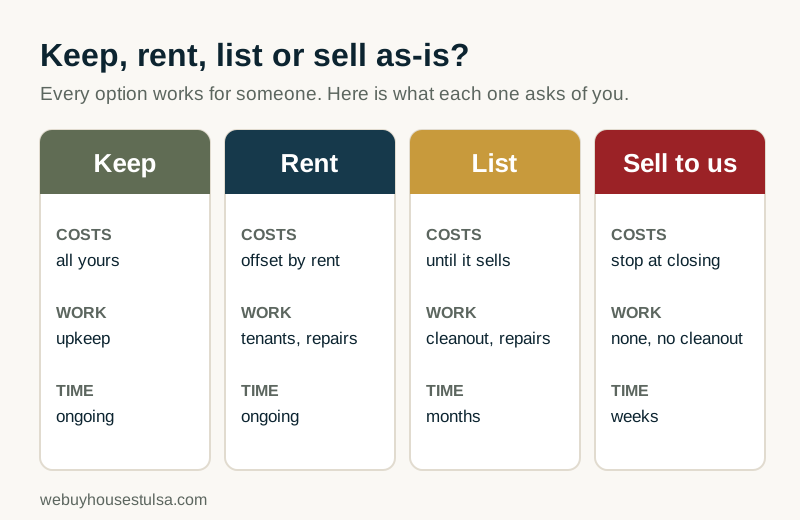
| Keep or move in | Rent it out | List with an agent | Sell to us as-is | |
|---|---|---|---|---|
| Money | None now, value stays in the house | Monthly rent, minus costs | Usually the highest price | Lower price, paid at closing |
| Monthly costs | Yours from now on | Yours, partly offset by rent | Yours until it sells | Stop at closing |
| Work for you | Upkeep and repairs | Repairs, tenants, paperwork | Cleanout, repairs, showings | None. No cleanout, no repairs. Take what you want, leave the rest. |
| Best fit | Someone wants to live there | You want long-term income | House is in good shape | House needs work or time matters |
There's no wrong column here. The right one is the one your family can actually live with, and the worksheet above usually points to it pretty fast.
Cleaning out your parent's house
Selling to us? You can skip this whole section. You don't have to clean, clear out or haul away anything. Take what matters to your family and leave the rest. We'll take care of it.
If you're keeping, renting or listing the house, this is the part that wears families out. A house that took 40 years to fill doesn't empty in a weekend, and every drawer has a story in it. A few things make it easier:
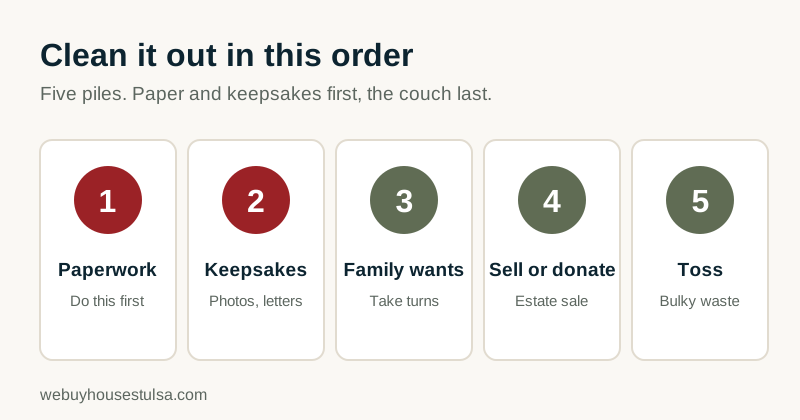
- Pull the paperwork first. Bank statements, insurance policies, titles, tax papers and anything with an account number. Don't toss paper until someone has gone through it.
- Then the keepsakes. Photos, letters, recipe cards, the good china. Get them out before anyone starts hauling.
- Let family claim things. Walk through together, take turns picking, and write down who gets what. It prevents a lot of hurt feelings later.
- Sell or donate the rest. An estate sale company can price and sell what has value. Local charities will often pick up furniture in good condition.
- Haul off what's left. Inside Tulsa city limits, the City's bulky waste pickup takes furniture, mattresses, appliances and more for $20 per 8 cubic yards (as of October 1, 2026). Schedule it at least three days before your trash day. Bigger jobs call for a dumpster or a junk hauler.
And again, if you decide selling to us is your best option, none of this is on you. Take your time with the photos and keepsakes, then leave everything else exactly where it is.
When siblings don't agree on the house
One sibling wants to keep it, one wants to sell it yesterday, and one lives in Denver and mostly wants the group chat to stop. Totally normal. A few things help families land somewhere:
- Get a real value. An agent's market analysis, an appraisal or a written offer gives everyone the same number to argue about.
- Put the monthly costs in writing. Share the worksheet and agree on who pays what while you decide.
- Pick a deadline. "Let's decide by spring" beats letting the house sit empty for two years.
- Consider a buyout. If one sibling wants the house, they can sometimes buy out the others. Bring in an attorney or title company to do it right.
Questions families ask about a parent's house
What should I do first with my parent's house after they pass?
Protect it. Lock it up, call the homeowners insurance company, keep the utilities on, and take valuables and important papers somewhere safe. The big decisions can wait a few weeks.
How long can the house sit empty?
There's no single deadline, but empty houses cost money every month and many insurance policies limit coverage once a home has been vacant for a while. Ask the insurance company exactly what applies, and have someone check on the house at least once a week.
Do the bills on the house stop when a parent passes away?
No. The mortgage, insurance, utilities and property taxes keep coming. Call the mortgage company to let them know, ask what they need from the family, and keep payments current if you can while things get sorted out.
Do we have to clean out the house before we sell it?
Not if you sell to us. You don't have to clean or clear out anything. Take what matters to your family and leave the rest, and we'll handle it. If you list with an agent, plan on emptying it first.
Should we fix the house up before we sell it?
Only if the numbers work. Repairs can raise the price, but they cost money and months of holding costs up front. Get a rough repair estimate and compare listing after repairs with selling as-is before you start.
Can I keep living in my parent's house after they pass?
Sometimes, but it isn't automatically your call. It depends on who has the legal right to make decisions about the house, so talk with the executor and an Oklahoma attorney first. If you do stay, plan on covering the costs and telling the insurance company someone lives there.
Want a second set of eyes on the house?
We're a family-owned Tulsa company, and we've been helping families with inherited houses for over 25 years. Tell us about the house and we'll walk through your options plainly, even if the best one isn't selling to us. Learn more about how we buy inherited houses in Tulsa.